
Kenya, Africa. The motherland of humanity. The oldest continent in the world. Ranging from equatorial mountains, icing-white Indian Ocean beaches, Swahili-Arabic streets, to, of course, a vast expanse of land where nature feels like it has managed to survive (and thrive) in Earth’s truest form…the Maasai Mara. Kenya is alive and it’s wild and I am hooked.
Subconsciously, I had always reserved the likes of Kenya for a special ‘honeymoon’ kind of trip; you know the safari trip you imagined being a once-and-done destination… but life has taught me you can’t wait round to take these kind of trips, so when I was presented with the opportunity to climb Mount Kenya with Millimetres 2 Mountains, it unfolded that Kenya was actually going to become somewhere I would want to revisit time and time again.
• FOR ITINERARY, BUDGET & TRAVEL TIPS: SCROLL TO END •
Nairobi 26º • Maasai Mara National Reserve 28º • Lamu Archipelago 30º • Watamu 31º
JANUARY is the height of summer. Temperatures can be hot with the odd shower. The landscape is lush with long grass from the ‘short rains’ that fall in November and December. Down on the coast, the days are hot and sunny with the sea at its clearest.
Let’s start with the heart of my Kenyan adventure and what finally brought me over to explore what this wild African landscape had to offer.
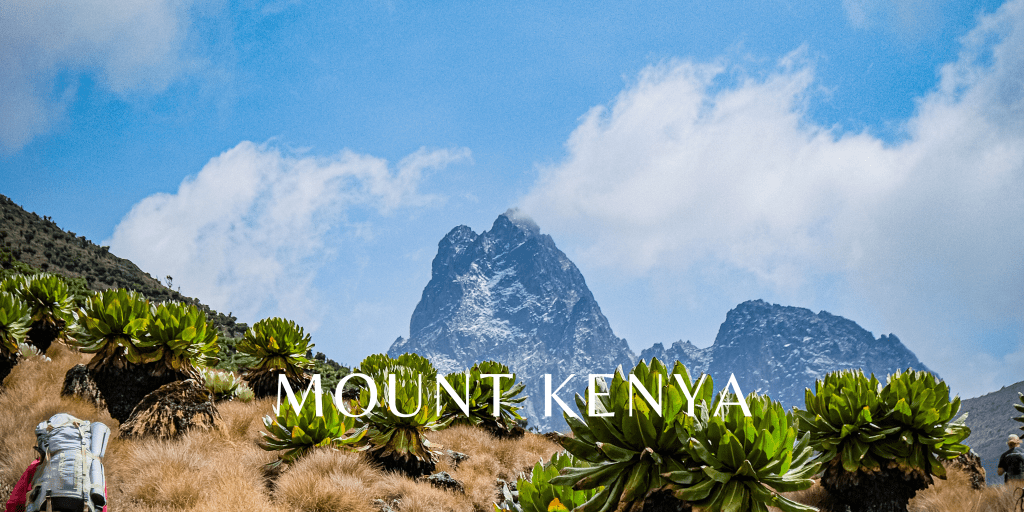
The majestic Mount Kenya straddles the equator, approximately 193km north-east of Nairobi. As the second-highest peak in Africa, after the well-trodden Kilimanjaro, Mt Kenya is an extinct volcano surrounded by the remnants of 11 glaciers and bizarre vegetation endemic to Kenya. Despite Kili being higher, Mount Kenya is considered a more interesting and challenging climb, with demanding mountain faces and an impressive collection of jagged rock formations. The ecology of the national park, with its afro-alpine flora, was what made this feel like a world I had never experienced.
Coordinated by Charity Challenge, all to raise valuable funds for a charity very close to my heart, Millimetres 2 Mountains; a group of 22 of us embarked on the Sirimon – Chogoria route to summit Point Lenana, at 4,985m.
ROUTE:
- Bantu Mountain Rock Lodge (1,950m) – the last bed and shower before we depart, we spent the night in this peaceful mountain lodge on the lower slopes of Mount Kenya National Park. Waking up to colobus monkeys, baboons & a local choir before we made our way to the entrance of the park.
- Sirimon Gate (2,650m) > Old Moses (3,340m) – crossing the equator and arriving at Sirimon Park Gate we began to leave civilisation behind as we entered the park and magnificent montane forests, reaching the high-altitude moorland and campsite Old Moses.
- Old Moses > Shipton’s Gate (4,236m) – trekking through the spectacular Mackinder U-shaped Valley, this is where the landscape began to reveal the unique, strange giant groundsel and lobelia plants, like something from a movie. This stunning setting framed the peaks of Mount Kenya and welcomed the resident rock hyrax. This is where things began to get harder as the altitude began taking its toll.
- Acclimatisation day at Shipton’s Camp – at the foot of Mount Kenya’s peaks, we spent a day acclimatising at basecamp alongside resident hyrax (small rodents) who feed on the leftover veg, which was welcomed after a rough 8 hours of altitude sickness had kicked in.
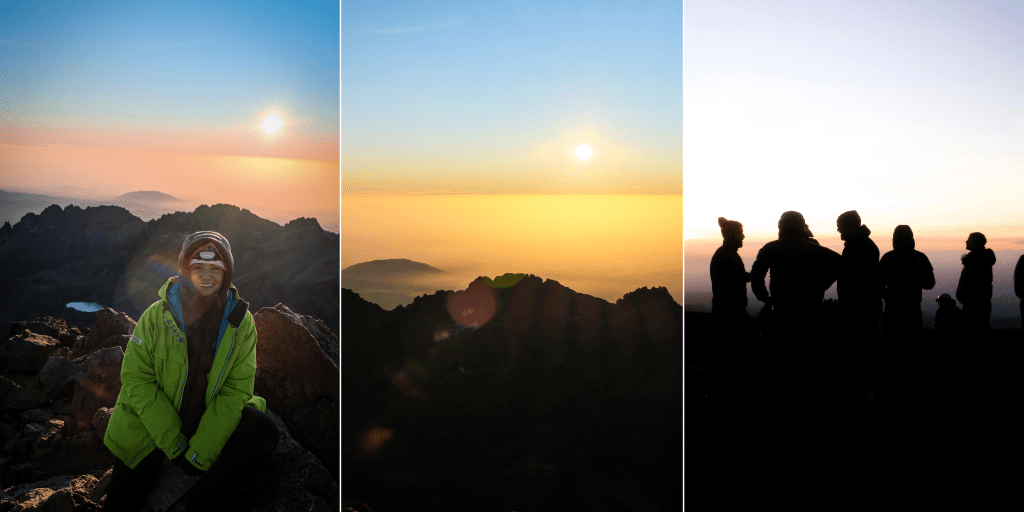
- Summit Day: Point Lenana, 4,985m – Beginning at 2am we began our torchlight summit of Point Lenana, scrambling up the rocky track and gazing up into the clearest starlit night sky. We reached the summit as the first light set the mountain face aglow. With Kilimanjaro in sight and a view that took my breath away, this moment is something I will never forget.
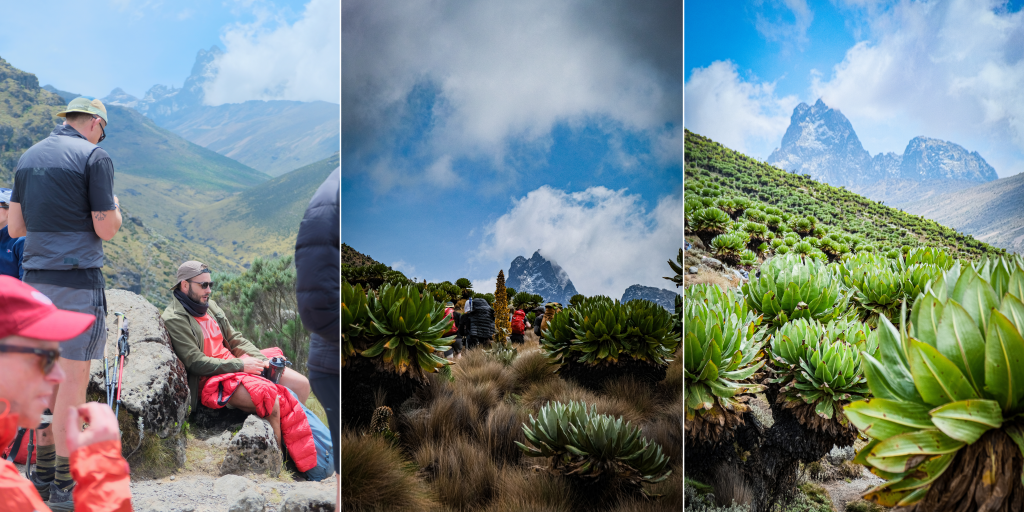
The people, the place, the challenge, all surpassed every expectation and made this a trip I’ll remember for the rest of my life. Millimetres 2 Mountains goes above and beyond to change lives, and selfishly, I get to benefit from the amazing community they have built, too. Thank you to Ed & Lois Jackson for coordinating this epic adventure, which pushed us all to our limits, but more importantly, for bringing these people together. The outstanding landscape and sunrise summit blew me away, but it was the people who made it.
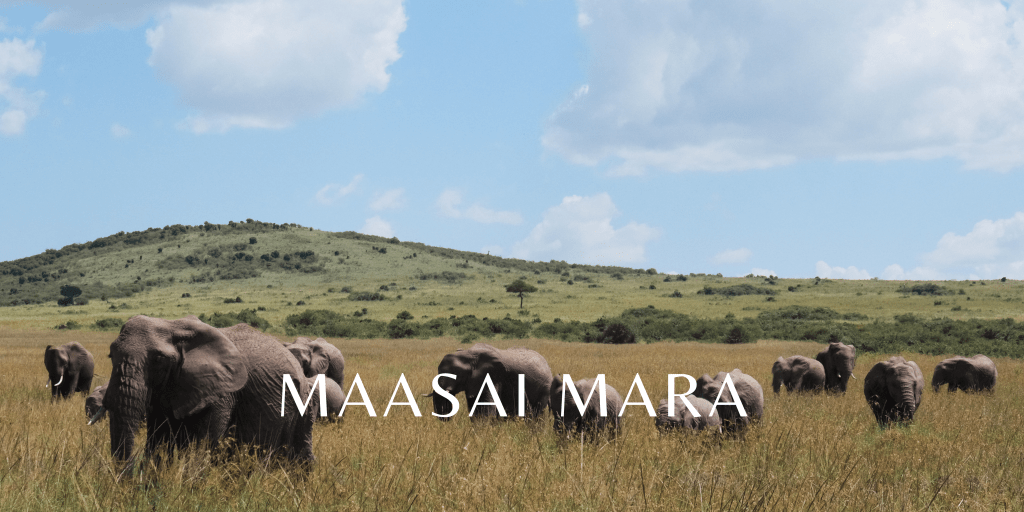
I never quite believed the extent to which people described the Mara; teeming with wild animals in their natural habitat, as far as the eye can see. Wild & vast, the Mara exceeded all of my expectations. I was blown away by the landscape, its beauty and just how spectacular it is to see these beautiful animals at home, thriving in their natural habitat. Just like our planet should be.

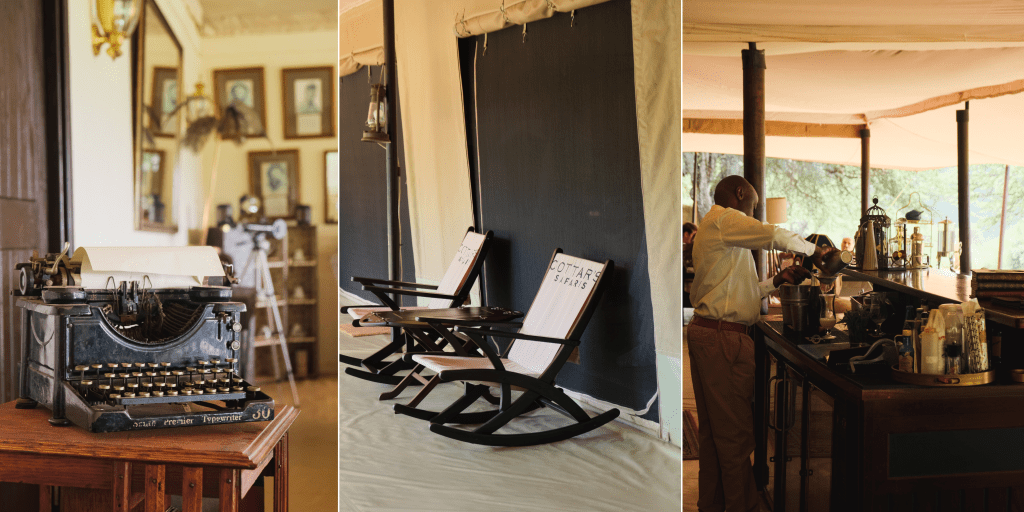
Situated in the untouched exclusive Olderkesi Conservancy bordering the Maasai Mara, Serengeti and Loliondo reserves; Cottar’s 1920s Camp felt like we had stepped into the next level of luxury, privacy and abundant wildlife. Owned and managed by the oldest established and continuing safari family in Africa, this camp made our first-time-safari experience beyond magical. The attention to detail in our 1920s-inspired tents, private Maasai guides and spotters who were at one with nature, the exclusivity of the conservancy, and the level of service provided, was next-to-none.
The Mara itself is a kaleidoscope of wildlife with warm and welcoming Maasai villages that live side-by-side. World-famous for the Great Migration, the Mara welcomes 1.5 million wildebeest onto its savannahs from July to October. Despite missing this, we were lucky to catch the post-rain lushness of the vegetation and the baby boom when the plains are brimming with life and young wildebeest, zebra and other herbivore calves are seen dashing through the plains. January to March are known as ‘Lion season’. With the disappearance of the rains, the grasses become less plentiful, and wildlife becomes easier to spot. You name it, we saw it.
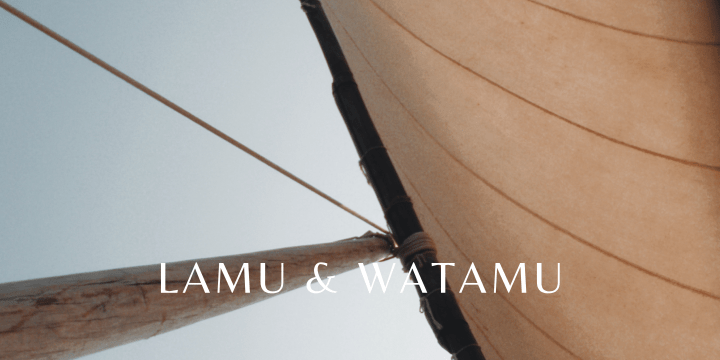
Lamu. This is the Swahili heartland. Not just the language, but the culture. Persian, Arabic, Indian; all woven into the Swahili coast for over a thousand years of history, and Lamu oozes this depth, which I was instantly captivated by. The narrow donkey streets of Shela weave onto the coastline of this Indian Ocean island where almond-shaped Dhow boats go about their daily business.
The Lamu Archipelago; a cluster of tropical islands just two degrees south of the equator off Kenya’s northern coast. Lamu, along with neighbouring Manda and Pate, forms a lush ecosystem, where dense mangrove forests provide timber, and a harbor for rich marine life. The island itself is about 108 square miles, home to four settlements: Lamu, Matondoni, Kipungani, and Shela. Lamu Town is the largest, its heart in the stone-built Old Town which began as a 10th Century Swahili settlement. Although its roots stretch back to the 10th century, the first known written mention dates back to 1441, as recorded by Sheikh Abu al-Mahasini. Lamu’s history is long, complex, and inextricably linked to the broader East African coast.

WHERE WE STAYED: Jannah Lamu in Shela. This stunning in-town hotel comprises of a small number of private apartments, which are beautifully designed and feature a windswept rooftop overlooking the Indian Ocean. If you are going to stay in the hustle and bustle of town, stay in Shela over the Old Town. My only criticism was that we didn’t have access to a pool, and I wouldn’t describe it as a ‘beach destination’. The alternative would be to base yourself at Manda Bay or somewhere like Syngué Sabour Cottage, and take day trips to Shela/Kipungani by boat.
WHERE WE ATE: Peponi, Kijani, Manda Bay
WHERE WE VISITED: Manda Bay by Jannah Dhow boat. MUST DO. Weaving through the mangroves, we made our way over to Manda Island, which is an isolated paradise.

Watamu beach was where we finally met true r&r after what was a jam-packed 2 weeks of Kenyan adventure.
WHERE WE STAYED: Lonno Lodge. I could not recommend this highly enough. This charming beach-front lodge was designed and built by an Italian couple. Tucked away down the beach from the main village of Watamu, we felt like we were in our own little paradise. At low tide, you can wade through the waters all the way down to the busier parts of the beach, along the icing-white sands and abundant marine rock pools.


$$$
This is hands down the most expensive trip to date & by a long way. Understandably, this is down to the nature of the trip, i.e. summiting a mountain and going on a safari, but Kenya is definitely not a destination you can travel on a ‘shoestring’. So, here is a breakdown of the eye-watering costs attached:
MOUNT KENYA: £3,299 inclusive of international return flights, 7 nights accom, 3 meals a day, internal transfers, guides & park fees.
SAFARI: approx £900 per night per person. Plus $100 per day park fees. Inclusive of all of your game drives and safari activities, full-board luxury tented accommodation. VIEW 2025 RATES
DOMESTIC FLIGHTS x5: £576
ACCOMMODATION: £956
*Price per person (you can do the maths…)

Saturday 11th January 2025:
International flight – London/GB : Heathrow T3 – Nairobi/KE : Jomo Kenyatta Intl (9hrs 40m)
Accommodation: Eka Hotel, Nairobi.
Sunday 12th January: MT KENYA
Transfer to Bantu Mountain Rock Lodge (1,950m). Accommodation: Lodge.
13th – 16th January: MT KENYA
Trekking in Mount Kenya National Park. Accommodation: Camping.
Friday 17th January: MT KENYA
Transfer back to Nairobi. Accommodation: Eka Hotel, Nairobi.
Saturday 18th January: MT KENYA
Day in Nairobi. Accommodation: Eka Hotel, Nairobi.
19th – 22nd January: SAFARI
Return Flight: Nairobi-Wilson > Mara Cottars Camp. Accommodation: Cottars 1920’s Camp.
22nd – 25th January: LAMU
Flight: Nairobi-Wilson > Lamu. Accommodation: Jannah Lamu.
25th – 29th January: WATAMU
Flight: Lamu > Malindi. Accommodation: Lonno Lodge.
Wednesday 29th January:
Flight: Malindi > Nairobi-Wilson. International Flight: Nairobi > London Heathrow.

- Planning this Kenyan trip was not easy, even for a well-versed traveller like myself. Logistically, depending on your plans, it can be complicated, so I would advise seeking help if you don’t have the time or knowledge of the country. I was fortunate enough to have the guidance of my insightful Kenyan friend Gabriella.
- Book all of your internal flights to the Mara and down to the Coast through Safarilink. There is no need to get a travel agent to do this.
- You can only take a soft 15kg bag on the flights into the Masai Mara, there is a complimentary luggage hold in the airport to leave larger bags.
- Do not pick up the starfish that the local beach-boys hand you in Watamu…it will kill them.
- Despite it being January, do not underestimate the -8º temperatures on the summit of Mount Kenya.
- For a multi-faceted trip like this, pack for every eventuality. The temperatures can really fluctuate from the freezing mountains, cool and potentially rainy Mara, to the coastal heat.

 Following Polly